
 4.0 PRObattery · on the go
 Home 230Vfor home
 Baby food warmersfrom 6 months
 Night Stationfor the night





 Cleaning Wipes Monthly Pack
 Home & 2Go Bundle
 Formula Dispenser Avent
 Baby Bottle Bundle












White Noise for Babies: Helpful or Harmful?
White noise can help some babies fall asleep. However, if it’s too loud or too close, it can pose a risk to their hearing. Here’s how to use white noise safely, complete with a checklist.

Contents
In short
White noise is a steady, consistent sound that can help some babies fall asleep. However, this has not been thoroughly studied. It can be harmful if the device is too loud or too close: In a study published in the journal *Pediatrics*, 3 out of 14 devices reached more than 85 dB(A) at full volume from a distance of 30 cm. According to Suva, hearing is considered at risk at this level in the workplace. Therefore, use white noise at a low volume, from a safe distance, never in bed, and only to help you fall asleep.
Hair dryers, vacuum cleaners, the sound of the ocean: Many parents notice that their baby calms down when exposed to steady sounds. That’s why white noise devices and apps are popular as sleep aids for babies. But is white noise beneficial or harmful for babies? Here’s what studies show, where the risks lie, and how to use white noise safely.
What Is White Noise?
White noise is a steady sound in which all audible frequencies occur at the same intensity. It sounds similar to a radio tuned between two stations. There are also pink and brown noises. They sound deeper and softer, much like rain or a waterfall. In everyday life, many parents also refer to heartbeats, the sound of the ocean, hair dryers, or vacuum cleaners as “white noise.”
You can get these kinds of sounds from special devices, sleep aids with melodies and sounds, or apps on your phone. For your baby, what matters in the end isn’t what the sound is called, but how loud it is, how close it is, and how long it lasts.
Does white noise help with falling asleep? What studies show
The body of research on this topic is limited. A frequently cited study involving babies dates back to 1990. British researchers divided 40 newborns, aged two to seven days, into two groups of equal size. In the group exposed to white noise, significantly more babies fell asleep within five minutes than in the group without it. The researchers concluded that white noise could help mothers soothe restless babies. However, the study was small, outdated, and examined only the process of falling asleep in the first few minutes.
A systematic review from 2021 evaluated 38 studies on continuous white noise as a sleep aid. The result: The quality of the evidence showing that white noise improves sleep is very low. The authors caution that better studies are needed before any recommendations can be made, particularly given the potential risks to hearing and sleep quality.
It is not entirely clear why white noise still helps some babies. One common explanation is that a steady sound masks sudden noises, such as a door slamming, siblings, or traffic. Some also speculate that it reminds them of the sounds they heard in the womb.
Good to Know
Your baby doesn’t have to sleep in complete silence. The British National Health Service (NHS) advises against keeping the house completely quiet. It’s good for your baby to get used to a certain amount of noise.
Is White Noise Harmful? Volume, Distance, and Duration
The biggest risk is the volume. In 2014, researchers tested 14 baby sleep aids in the journal *Pediatrics*, published by the American Academy of Pediatrics (AAP). They took measurements at three different distances while the devices were set to full volume.
| Distance from the device | Average peak level | Devices over 50 dB(A) |
|---|---|---|
| 30 cm, for example, at the bedrail | 79 dB(A) | all 14 |
| 100 cm, next to the bed | 71 dB(A) | all 14 |
| 200 cm, in the room | 63 dB(A) | 13 of 14 |
By way of comparison: For hospital neonatal units, the study cites a recommended level of 50 dB(A), averaged over one hour. Three of the 14 devices even exceeded 85 dB(A) at a distance of 30 cm. According to Suva, hearing is at risk at noise exposure levels of 85 dB(A) or higher. This value is based on occupational safety guidelines for adults.
Three points make all the difference:
- Volume: The louder the volume, the greater the noise exposure. Full volume is never necessary.
- Distance: It’s loudest right next to the bed. Even at a distance of 2 meters, 13 out of 14 devices still exceeded 50 dB(A) at full volume. So distance alone isn’t enough—you also need to turn down the volume.
- Duration: If the device runs all night, your baby will hear the noise for many hours. The authors of the study recommend running the device only briefly, until your baby is sound asleep.
Whether constant noise affects the development of hearing has not been studied in humans. In an animal study conducted in 2003, the auditory cortex of young rats developed significantly more slowly when exposed to constant noise. Once the animals were returned to a normal environment, their development caught up. Rats are not a perfect model for babies. However, this finding is a good reason to avoid constant exposure to noise.
Warning
White noise does not protect against sudden infant death syndrome (SIDS). The AAP advises against products that claim to do so, as there is no evidence to support this. It remains important to place the baby on their back, in their own bed, on a firm mattress, and in a sleep sack.
Using White Noise Safely: The Checklist
The study authors recommend placing the device as far away from the baby as possible—never in or near the bed—setting it to the quietest volume possible, and using it only for short periods of time. This results in the following checklist:
- Never place it in the bed, against the bedrail, or next to the child’s head in the stroller
- Place it as far away as possible—for example, on a dresser on the other side of the room
- Set it to the quietest volume level that’s still effective; never use full volume
- Listen at the head of the crib: You should be able to have a quiet conversation right next to it
- Use a timer or turn off the device as soon as your baby is sound asleep
- Keep cords and charging cables out of reach
- For apps: Don’t put your phone in bed; the same rules apply to the volume
- Make sure the rest of the sleeping environment is safe: back-sleeping position, own bed, sleep sack
To find out what a safe sleeping environment looks like during the first few months, read the guide “Moses Basket and Baby Cradle: From When to When?”
Tip
If your baby barely reacts to sounds or if you’re concerned about their hearing, talk to your pediatrician or the parenting counseling service.
Alternatives: A Calm Bedtime Routine
White noise isn’t a must. Often, a calm, repetitive sequence before bed works just as well. For example, the NHS suggests these steps for an evening routine:
- Bath Time A warm bath can kick off the evening.
- Changing and Getting Dressed: A fresh diaper and pajamas, then into the sleeping bag.
- Dim the lights: Soft lighting creates a calm atmosphere in the room.
- Cuddling and singing: A goodnight kiss, a hug, a lullaby, or a music box.
- Put themto bed: Put your baby in their bed, ideally following the same routine every night.
It’s also helpful to distinguish between day and night. During the day, the curtains can stay open, and everyday noises aren’t a problem. At night, keep the lights dim, speak little and softly, and put your baby back down right after feeding and changing. For tips on how to quickly prepare a bottle at night, see the guide “Quickly Preparing a Bottle at Night.”
By the way, your own voice is the simplest way to help your baby fall asleep: a soft “Shhh,” humming, or a song. You’ll naturally know when to stop as soon as your baby falls asleep.
The LIINI® Sleep Aid: What It Can Do
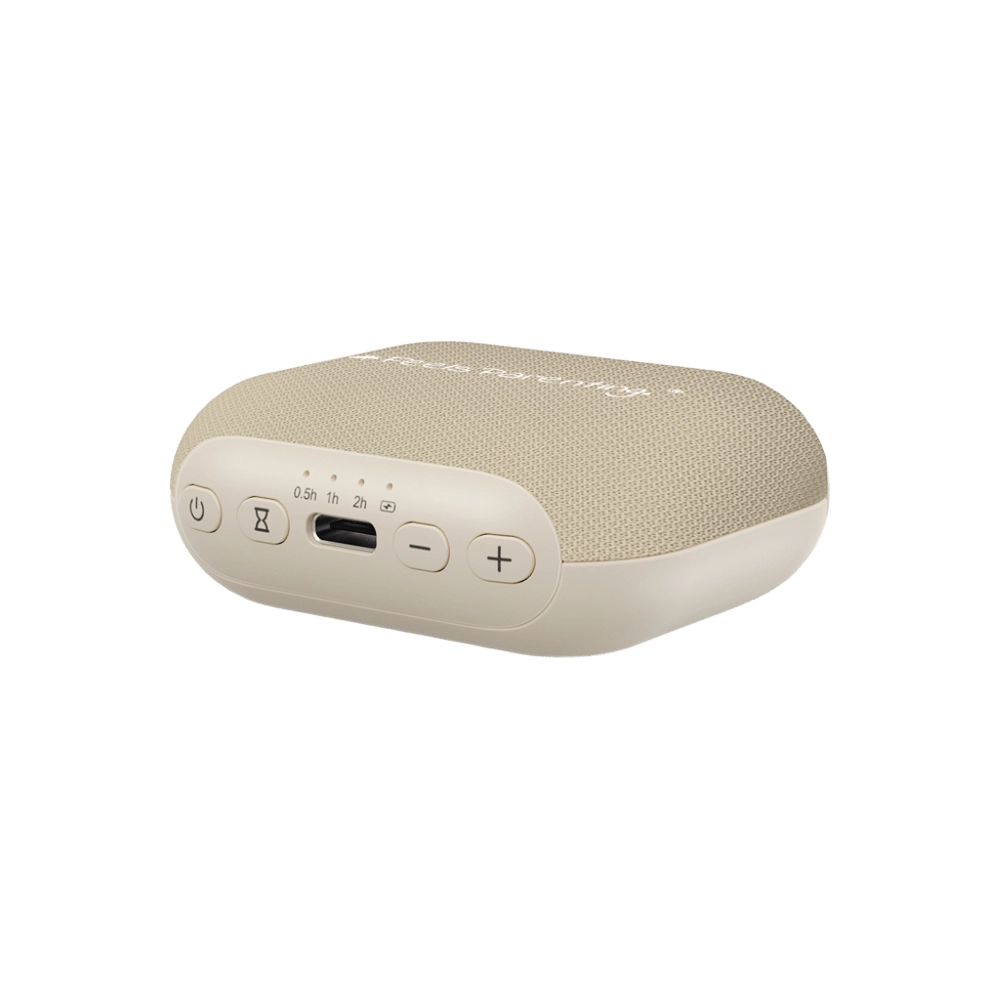
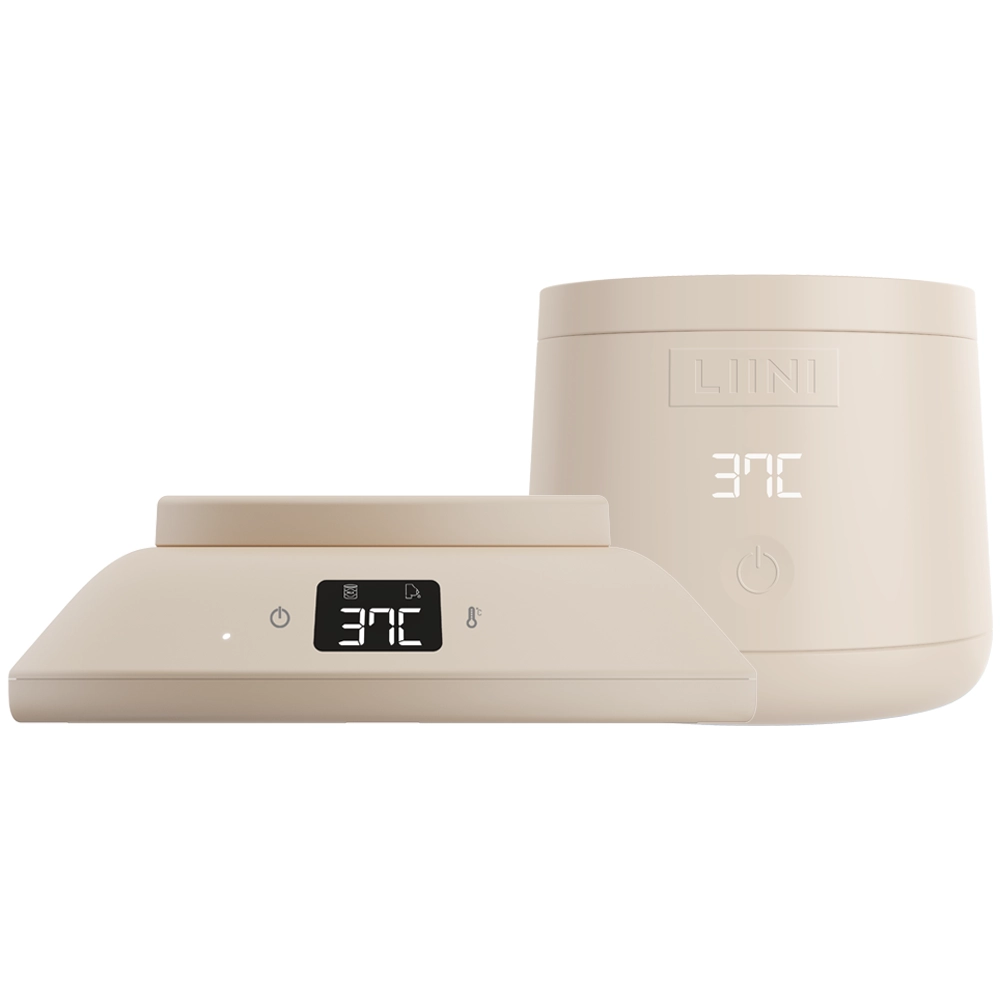
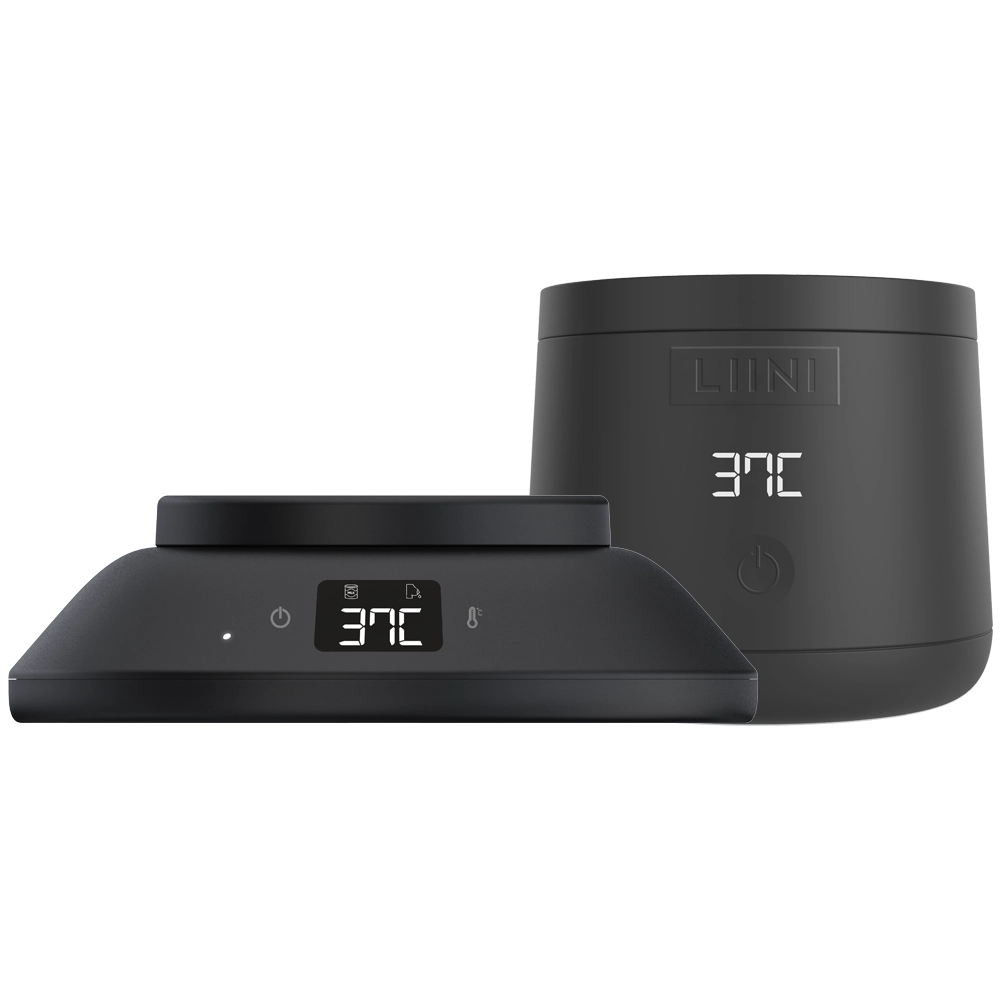
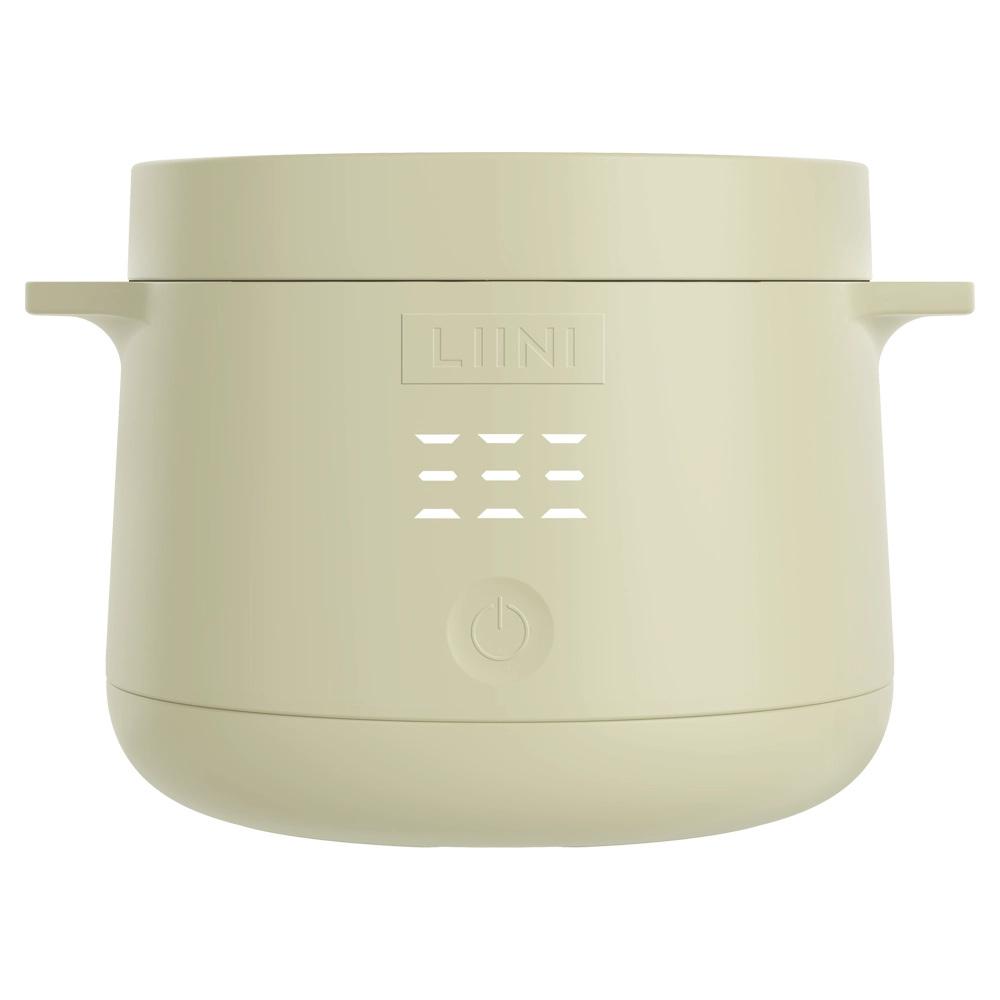
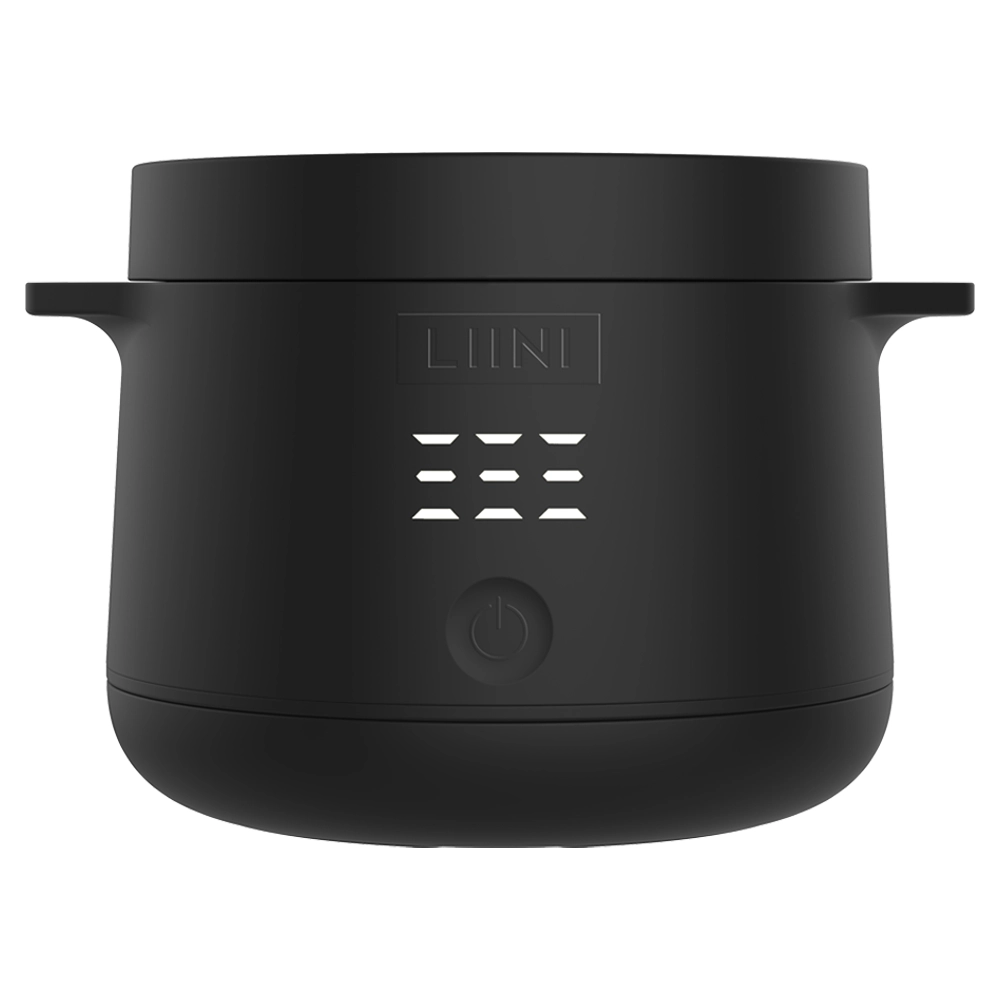
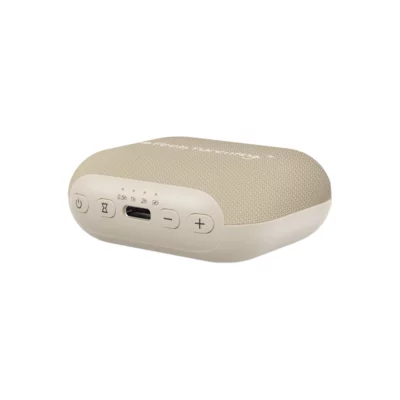
The LIINI Sleep Aid 2.0 offers 20 soothing sounds, including gentle melodies and ambient noises. It’s available in beige and black. As with any device, the same rules apply: set the volume low, place it at a distance, don’t put it in the crib, and turn it off once your baby is sound asleep. You can find more models under “Sleep Aids.”
Frequently Asked Questions
Is white noise harmful to babies?
It depends on how you use it. It becomes a problem especially when the device is running loudly and close to the crib. In one test, some devices reached more than 85 dB(A) at full volume from a distance of 30 cm. Therefore, place the device far away and set it as quietly as possible.
How loud can white noise be for a baby?
As quiet as possible. There’s no set limit for the home. As a guideline, the study in *Pediatrics* cites 50 dB(A) as the recommended hourly level for hospital neonatal units. In everyday life, this means you can easily have a quiet conversation at the head of the bed.
Can white noise run all night?
It’s better not to. The study’s authors recommend running the device only briefly, until your baby is sound asleep. Use a timer or turn it off manually.
When can you start using white noise for your baby?
There is no set age limit. In the often-cited 1990 study, the babies were between two and seven days old. The key factors at any age are volume, distance, and duration.
How do I wean my baby off white noise?
Gradually turn the volume down over the course of a few days and let the device run for shorter periods of time. A calm bedtime routine that includes dimming the lights, cuddling, and a song will gradually replace the white noise. There aren’t any good studies on weaning babies off white noise. Go at your baby’s pace.
Is pink or brown noise better than white noise?
Pink and brown noise sound deeper and are more pleasant to many people. There is no evidence that one type is more effective for babies. When it comes to safety, it’s not the color of the noise that matters, but the volume, distance, and duration.
Can I use a cell phone app instead of a device?
Yes, the same rules apply. Don’t put your phone in bed or next to your head—keep it far away—and set the volume to low. A timer in the app helps turn off the white noise after your baby falls asleep.
Does white noise protect against sudden infant death syndrome (SIDS)?
No. The AAP advises against products that claim to reduce the risk of sudden infant death syndrome because there is no evidence to support this. According to the Children’s Hospital Zurich, the following are important: sleeping on the back, a separate bed with a firm mattress, a sleep sack, and a smoke-free environment. Breastfeeding or using a pacifier while sleeping also act as protective factors.
Sources
- Infant Sleep Machines and Hazardous Sound Pressure Levels, Hugh SC et al., Pediatrics 2014, American Academy of Pediatrics
- Can Sleep Machines Damage Infant Hearing?, NEJM Journal Watch (abstract of the Pediatrics study)
- Sleep Machines May Damage Infant Hearing, ENTtoday (summary of the Pediatrics study)
- White Noise and Sleep Induction, Spencer JA et al., Archives of Disease in Childhood 1990
- Noise as a Sleep Aid: A Systematic Review, Riedy SM et al., Sleep Medicine Reviews 2021
- What criteria should be considered when choosing hearing protection?, Suva
- White Noise Delays Auditory Organization in the Brain, ScienceDaily (Press release regarding Chang & Merzenich, Science 2003, Howard Hughes Medical Institute)
- Helping Your Baby Sleep, NHS
- How to Keep Your Sleeping Baby Safe: AAP Policy Explained, HealthyChildren.org, American Academy of Pediatrics (AAP)
- Information for Parents: Safe and Healthy Sleep, University Children’s Hospital Zurich


