
 4.0 PRObattery · on the go
 Home 230Vfor home
 Baby food warmersfrom 6 months
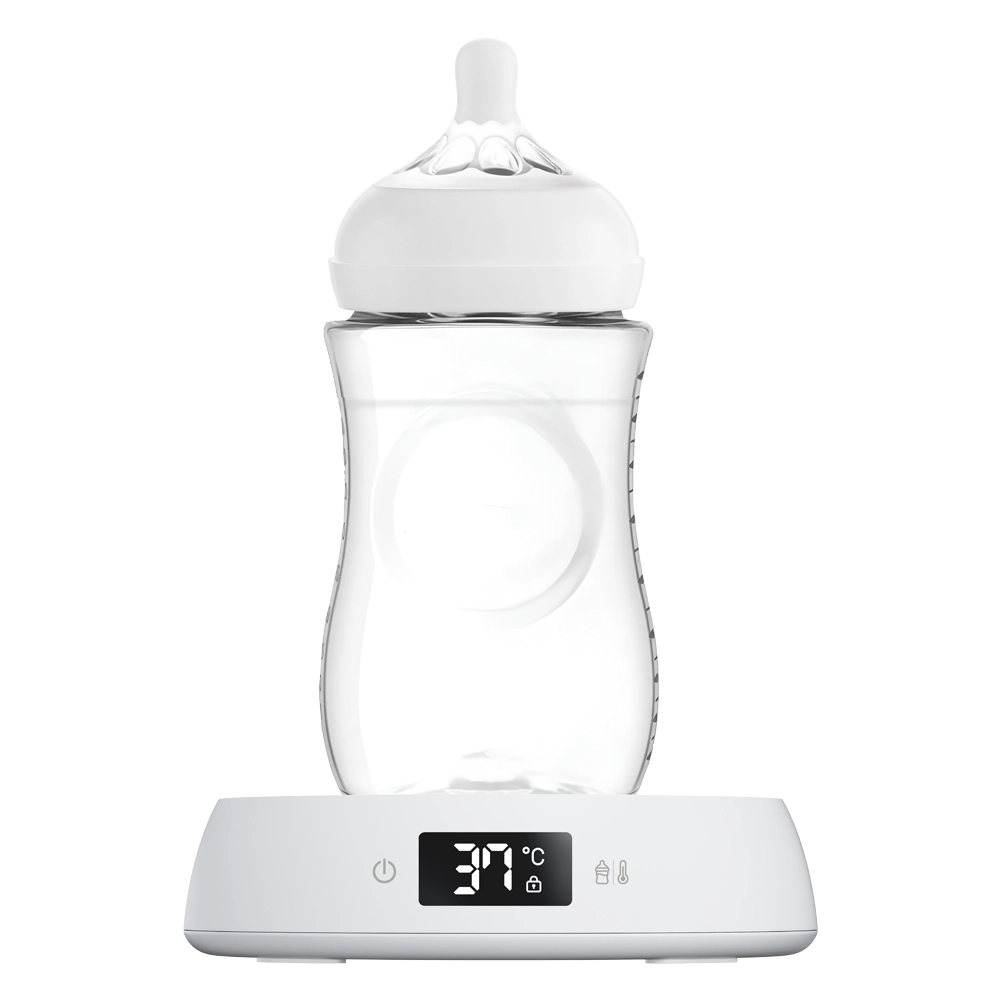 Night Stationfor the night







 Cleaning Wipes Monthly Pack
 Home & 2Go Bundle
 Formula Dispenser Avent
 Baby Bottle Bundle



























Calculate Due Date: Calculator and Weeks of Pregnancy
Calculator for Due Date and Gestational Week: Naegele's Rule with cycle correction, calculation from conception, 12+3 notation, trimesters, and the important weeks of pregnancy.

Contents
In short
You can calculate your due date by adding 280 days—or 40 weeks—to the first day of your last period. This is the Naegele rule. If your cycle is longer or shorter than 28 days, adjust the due date by the difference. If you know the date of conception, add 266 days. “12+3 weeks of pregnancy” means 12 full weeks and 3 days, so you’re in your 13th week. The due date may still be adjusted after your first ultrasound, and only about 5 percent of babies are born exactly on the calculated due date.
Due date calculator
When will your baby arrive? Work out your estimated due date and how many weeks pregnant you are.
Calculate from
The day your bleeding started.
The calculation assumes a 28-day cycle. A longer or shorter cycle moves the due date.
Calculated in your browser only. Nothing is saved or sent.
Enter a date and your estimated due date will appear here.
Estimated due date
Today
Trimester
Until your due date
Window around your due date
–
37+0 to 41+6 weeks: a birth during this time is considered full term.
The calculated date is a guide. Your doctor or midwife may adjust it after your first ultrasound scan.
When is your baby due? Use the calculator above to figure out your due date and see which week of pregnancy and which trimester you’re in. Here, you’ll learn how the calculation works, how to correctly interpret the weeks, and why your due date is really more of a range.
Calculating Your Due Date: How the Naegele Rule Works
On average, a pregnancy lasts 40 weeks or 280 days, counting from the first day of your last period. That’s how the University Hospital of Zurich and the German website familienplanung.de explain it. Experts refer to this as the Naegele rule, named after a gynecologist from Heidelberg.
To calculate it by hand, here’s the rule: Subtract 3 months from the first day of your last period, then add 7 days and 1 year. For example: Your last period began on January 10, 2026. Subtract 3 months to get October 10, add 7 days to get October 17, and add 1 year to get October 17, 2026.
Cycle Adjustment for Longer or Shorter Cycles
The Naegele rule is based on a 28-day cycle. If your cycle is longer or shorter, according to the Professional Association of Gynecologists, you should add or subtract the difference. So, for a 32-day cycle, add 4 days: October 17 becomes October 21. The calculator above does this automatically for cycles ranging from 21 to 45 days.
If your cycle is irregular or you don’t know the exact date of your last period, your doctor will determine the gestational age using an early ultrasound, according to the University Hospital of Zurich.
Calculating from conception or embryo transfer
If you know the date of conception, according to the Professional Association of Obstetricians and Gynecologists, you add 266 days—that’s 38 weeks. In the example above, conception would have been around January 24, and the due date remains October 17. After in vitro fertilization (IVF), the Swiss Society for Ultrasound in Medicine calculates it as follows: the date of embryo transfer plus 266 days, minus the age of the embryo in days.
Important: Even if you start counting from conception, the weeks of pregnancy are still counted from the start of your last period. According to familienplanung.de, conception occurs about two weeks after your period, so on that day, you’re already at about 2+0.
Understanding Pregnancy Weeks Correctly: What Does 12+3 Gestational Weeks Mean?
Pregnancy weeks (SSW) are counted from the first day of your last period. So for the first two weeks or so, you’re not actually pregnant yet; according to familienplanung.de, conception doesn’t occur until about two weeks later.
Experts often write the weeks with a plus sign; for example, the ultrasound guidelines state “11+0 to 13+6.” 12+3 means 12 full weeks and 3 days. So you’re right in the middle of your 13th week of pregnancy. This is exactly where misunderstandings often arise:
- “13+0” is the first day of the 14th week.
- “In the 13th week of pregnancy” means: somewhere between 12+0 and 12+6.
- The estimated due date is 40+0: that’s when exactly 40 weeks have elapsed.
Specialized agencies use both forms of expression; for example, the IQWiG’s German health portal states “from the 42nd week of pregnancy (from 41+0).” If you’re unsure which week is being referred to, just ask.
Tip
Write down your appointments using the “plus” notation, such as “Ultrasound at 12+2.” This makes it easy to compare them with your report and the calculator.
Trimesters: The Three Stages of Pregnancy
Pregnancy is divided into three trimesters, which are periods of about three months each. We count the same way as the calculator above: The first trimester extends to 13+6, the second from 14+0 to 27+6, and the third begins at 28+0. For the first trimester, we follow the ultrasound guidelines of the German, Austrian, and Swiss professional associations, which define the first-trimester timeframe as extending up to 13+6. The 28+0 cutoff is used, for example, by the U.S. ICD-10-CM classification. Other organizations define the boundaries slightly differently: familienplanung.de counts the first trimester from the 1st to the 13th week, the second from the 14th to the 26th, and the third starting at the 27th week. This classification is for general guidance; medically, the individual weeks are what matter. When you hear “ten months,” this refers to four-week periods: 10 times 4 equals 40 weeks.
If you’re feeling so nauseous during the first trimester that you can barely keep anything down, read our guide on morning sickness and contact your doctor or midwife.
How an Ultrasound Can Adjust Your Due Date
The gestational age can be determined most accurately during the first trimester. The Swiss Society for Ultrasound in Medicine (SGUM) recommends measuring the crown-rump length between 11 and 14 weeks. Its recommendations have been approved by a commission of the Swiss Society of Gynecology and Obstetrics (SGGG).
Here’s how the adjustment works:
- Measurements: During the ultrasound, your baby is measured from crown to rump.
- Comparison: The doctor compares the measured gestational age with the gestational age based on your last menstrual period.
- Correction: If there is a discrepancy of more than 5 days between the two, the gestational age is corrected according to SGUM guidelines, and you’ll be given a new appointment.
- Recording: According to the SGUM, a later correction is no longer permitted.
According to the Federal Office of Public Health (FOPH), basic health insurance covers two ultrasound exams during a normal pregnancy: one between the 12th and 14th weeks and one between the 20th and 23rd weeks of pregnancy. The SGUM specifies the exact time frames as 11+0 to 14+0 and 20+0 to 23+0. If your ultrasound results in a corrected due date, use that as your guide, including when counting the weeks.
Important Weeks of Pregnancy
These time points are important in Switzerland; differences for Germany and Austria are noted.
| Week | What’s Happening | According to |
|---|---|---|
| 0+0 | First day of your last period; the weeks are counted from here | familienplanung.de |
| approximately 2+0 | Conception (for a 28-day cycle) | familienplanung.de |
| 11+0 to 13+6 | Time window for the first-trimester screening test with nuchal translucency measurement | Guideline from DEGUM, SGGG, SGUM, and others |
| 11+0 to 14+0 | First ultrasound (according to the FOP, 12th to 14th week of pregnancy); the appointment is scheduled | SGUM, BAG |
| Starting at the 13th week of pregnancy | No more deductible or copay, even for general services, until 8 weeks after birth. Checkups and ultrasounds are already covered prior to that | BAG |
| 20+0 to 23+0 | Second ultrasound (according to the BAG, 20th to 23rd week of pregnancy) | SGUM, BAG |
| 8 weeks before the birth | Switzerland: No work between 8 p.m. and 6 a.m. Austria: Maternity leave begins | Canton of Zurich, SECO, Chamber of Labor |
| 6 weeks before the due date | Germany: Maternity leave begins | Federal Family Portal |
| 37+0 | Your baby is no longer considered premature | USZ, WHO |
| 40+0 | Estimated due date | USZ, familienplanung.de |
| 41+0 | Induction of labor is usually offered | IQWiG, DGGG/OEGGG/SGGG Guideline |
| 42+0 | Transfer; induction strongly recommended | IQWiG, DGGG/OEGGG/SGGG Guideline, familienplanung.de |
Good to Know
Parliament has decided that, going forward, the waiver of the deductible and copay will apply starting from the beginning of pregnancy as certified by a doctor or midwife, rather than only from the 13th week onward. According to the Federal Office of Public Health (BAG), the change is scheduled to take effect on January 1, 2027. As of October 2026.
When will the baby actually arrive?
The due date is just a rough estimate. According to the University Hospital of Zurich, it’s accurate for only about 5 percent of births. According to familienplanung.de, about 90 percent of babies are born within two weeks before or after the due date.
A pregnancy is considered normal if it lasts from 37+0 to 41+6. According to the University Hospital of Zurich, if your baby is born before 37+0, it is considered a preterm birth; according to familienplanung.de, a pregnancy lasting 42+0 or longer is considered post-term. The British National Health Service (NHS) also lists 37 to 42 weeks as the normal duration.
Warning
Contact your midwife, doctor, or the delivery room immediately if you’re bleeding, losing amniotic fluid, having regular contractions, or if your baby is moving less than usual. This is the recommendation from the University Hospital of Zurich and the Lucerne Cantonal Hospital. Before 37+0, contractions, bleeding, and your water breaking can be signs of a threatened preterm birth. In an emergency, dial 144.
The guide “Contractions and Your Water Breaking: When to Go to the Hospital?” explains when to go to the hospital once your contractions start. To help you avoid having to search for things later, check out the “Packing Your Hospital Bag” checklist. You’ll find everything your baby will need afterward in the “Essential Items Checklist.”
Past Your Due Date: What Now?
Once you’ve passed your due date, you’ll receive more frequent monitoring. The IQWiG recommends about two checkups per week, including fetal heart rate monitoring (CTG) and ultrasound. According to the IQWiG, starting at 41+0, your doctor or midwife will usually offer to induce labor. Starting at 42+0, the obstetric team strongly recommends not waiting any longer. The joint guideline from the German, Austrian, and Swiss professional associations states something similar: Induction can be offered starting at 41+0, should be recommended starting at 41+3, and is strongly recommended starting at 42+0. You can read about how this works in the guide on labor induction.
Maternity Leave: Why the Due Date Also Matters for Work
In Switzerland, maternity leave does not begin until after the birth. According to the AHV/IV information sheet, it lasts 14 weeks or 98 days. You will receive 80 percent of your previous earned income, up to a maximum amount. There is no paid maternity leave before the birth. However, starting eight weeks before the birth, you are not allowed to work between 8 p.m. and 6 a.m., according to the Canton of Zurich. After the birth, there is an eight-week ban on working. As of October 2026.
In Germany, on the other hand, maternity leave begins six weeks before the estimated due date; in Austria, it begins eight weeks before.
The guide “Maternity and Paternity Leave in Switzerland” explains everything you need to know about eligibility, duration, and paternity leave.
Frequently Asked Questions
How accurate is the estimated due date?
It’s a rough estimate. According to the University Hospital of Zurich, only about 5 percent of babies are born exactly on the calculated due date. According to familienplanung.de, about 90 percent are born within two weeks before or after the due date.
How do I calculate the gestational week if I have an irregular cycle?
Enter your average cycle length into the calculator, and the due date will be adjusted accordingly. If your cycle varies significantly, your doctor will determine your gestational age during an early ultrasound.
What does 12+3 weeks of pregnancy mean?
You are 12 weeks and 3 days pregnant, which means you are in your 13th week of pregnancy. The number before the “+” indicates the number of full weeks, and the number after the “+” indicates the number of days.
When does the pregnancy start?
From the first day of your last period, not from conception. That’s why, mathematically speaking, you’re already about two weeks pregnant on the day of conception.
Can my due date still change?
Yes, during the first-trimester ultrasound. If the measured gestational age differs from the calculated date by more than 5 days, the due date is corrected according to the SGUM. After that, it remains the same, even if your baby is later measured to be larger or smaller.
How do I calculate the due date after artificial insemination?
Starting from the embryo transfer: the date of the transfer plus 266 days, minus the embryo’s age in days. This is the recommendation of the Swiss Society for Ultrasound in Medicine.
How many weeks does a pregnancy last?
On average, 40 weeks or 280 days from the first day of the last menstrual period. A birth between 37+0 and 41+6 is considered normal. Before that, it is referred to as a preterm birth; after 42+0, it is referred to as a post-term pregnancy.
Sources
- Calculate Due Date (Pregnancy Calculator), University Hospital of Zurich
- Care for Women at Risk of Preterm Birth, University Hospital of Zurich
- Shortly Before Delivery, Lucerne Cantonal Hospital
- Recommendations for Ultrasound Examinations During Pregnancy (4th Edition 2019, PDF), Swiss Society for Ultrasound in Medicine, Section of Gynecology and Obstetrics (SGUMGG), approved by a commission of the SGGG
- Guideline on First-Trimester Diagnosis and Treatment @ 11–13+6 Weeks of Pregnancy (AWMF 085-002, PDF), DEGUM in collaboration with DGGG, ÖGUM, OEGGG, SGUMGG, and SGGG
- Health Insurance: Maternity Benefits, Federal Office of Public Health (FOPH)
- KVG Amendment: Cost-Containment Measures – Package 2, Federal Office of Public Health (BAG)
- Implementation of Cost-Containment Package 2: New Rules on Reference Rates, Laboratories, and Determining the Start of Pregnancy, FOPH Press Release, November 26, 2025
- Overview Table on Maternity Protection: Protective Measures (PDF, as of June 30, 2026), State Secretariat for Economic Affairs (SECO)
- Fact Sheet 6.02 EO Benefits: Maternity Allowance, AHV/IV Information Center
- Maternity Protection in the Workplace, Canton of Zurich, Office of Economic Affairs
- Weeks of Pregnancy, familienplanung.de, Federal Institute for Public Health (BIÖG)
- How Are Weeks of Pregnancy Counted?, familienplanung.de, BIÖG
- Due Date (Expected Delivery Date), familienplanung.de, BIÖG
- Naegele’s Rule, familienplanung.de, BIÖG
- Trimester, familienplanung.de, BIÖG
- When the baby is late, familienplanung.de, BIÖG
- Duration of Pregnancy & Due Date, Gynecologists Online, Professional Association of Gynecologists (BVF), and DGGG
- When the Baby Is Late: When Should Labor Be Induced?, gesundheitsinformation.de, IQWiG
- Guideline on Induction of Labor, AWMF Register 015-088 (S2k, as of 12/2020, valid until 12/2025, revision pending, PDF), DGGG, OEGGG, and SGGG
- Maternity Leave, Federal Family Portal, Germany
- Maternity Leave Regulations, Austrian Chamber of Labor
- Pregnancy due date calculator, NHS
- ICD-10-CM, Chapter O00–O9A: Pregnancy, Childbirth, and the Puerperium (Chapter Note on Trimesters), Reproduction of the U.S. ICD-10-CM classification on icd10data.com
- Preterm birth (Fact sheet), World Health Organization (WHO)
- Risks and Emergencies, ch.ch, Federal Government and Cantons


